
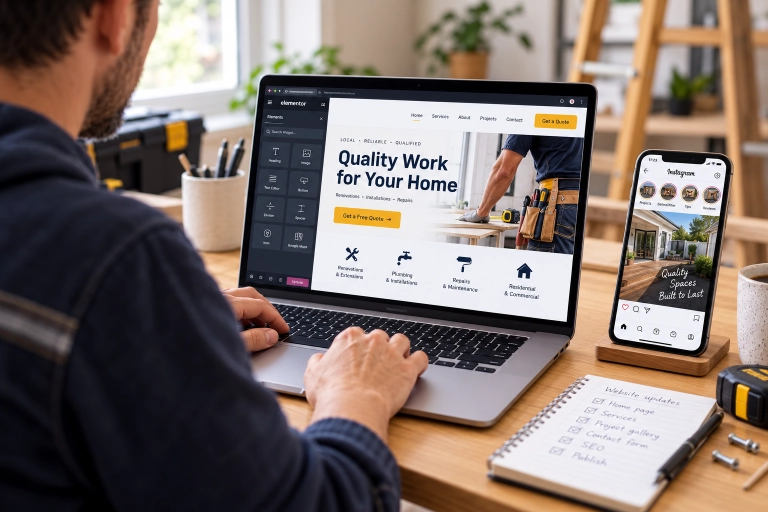
If you’ve built a following on Instagram and bookings are trickling in through DMs, it’s a fair question to ask: does my business need a website, or is social media enough? It’s one of the most common things new business owners put off, often until the to-do list gets quieter or a client asks for a link you don’t have. Social media and a website do different jobs, and at some point the gap between them starts costing you.
What Social Media Is Actually Good At
Instagram and Facebook are good for showing up where people already are, sharing behind-the-scenes content, and building a sense of personality and connection. For a very new business testing an idea, that’s genuinely enough to get started.
But social platforms were never built to be your business’s home base. You’re a guest on someone else’s property, and the algorithm decides who sees you, not you.
Why a Website Still Matters in 2026
Credibility is the big one. In a WordStream survey of US small businesses, 63% of those with a website said it was extremely or very important to their growth, which tells you most businesses that have made the leap don’t see it as optional anymore.
Reviews feed directly into this. BrightLocal found that 54% of consumers visit a business’s website after reading positive reviews, so if someone searches your name after a glowing review and finds nothing but a social profile, you’ve lost some of that momentum.
Local discovery is another piece of it. BrightLocal also reported that 84% of US consumers had searched for a local business online in the past three months, which means most of your potential customers are actively looking, not just scrolling. Yet while most small businesses told BrightLocal they invest in SEO, only 40% said they have a dedicated business website,so there’s a real opportunity for businesses willing to show up properly where competitors haven’t.
Most of these figures come from US surveys, but they’re a useful guide to how customers in Australia look for local businesses too.
The AI Search Shift Changes the Stakes
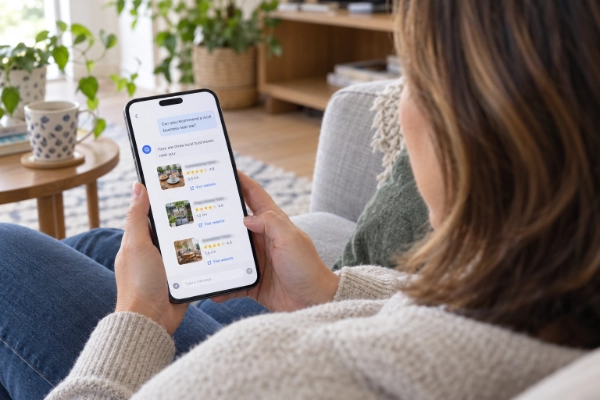
There’s a newer factor in this conversation: AI-powered search and recommendations. BrightLocal reported that AI tools are used by 45% of consumers for recommendations, and if a customer asks an AI assistant to recommend a business like yours, that tool needs a reliable, structured source of information to pull from. A social profile alone doesn’t give it much to work with.
This shift is already showing up in the numbers. WordStream found that 40% of small businesses had seen at least some disruption to their website traffic, linked to Google’s algorithm changes and the move to AI-powered search, which suggests the way people find businesses is genuinely changing, not just shifting slowly. Having a website helps you be found the old way, and it helps you be understood correctly by the new tools too.
A Website Only Works If It’s Looked After
It’s worth being realistic here too. A website isn’t a magic fix. When the same WordStream survey asked about website challenges, driving and converting traffic came out on top, making up 35% of the answers, so simply having a site doesn’t guarantee visitors will show up.
BrightLocal has made the point that websites should be current, navigable, and effectively aligned with customer reviews, which is a useful reminder that a neglected, outdated website can do almost as much damage as having none at all. The goal isn’t just to launch a site, it’s to keep it accurate and easy to use.
So, When Does It Pay For Itself
If you’re a very early-stage business still testing whether there’s demand, social media alone can carry you for a while. But once you’re getting regular enquiries, relying on reviews, or noticing people searching for you by name, a website starts paying for itself in trust, visibility, and control over your own information.
This question comes up constantly for local service businesses weighing up Google Business Profile and social media against a proper site, and there’s no universal answer. But the direction of travel, through reviews, local search, and now AI recommendations, increasingly points toward needing a home base that’s genuinely yours.
Social media builds connection, but a website builds credibility, ownership, and findability that no platform can fully replace. If you’d like help with this for your business, feel free to get in touch.